Freya Patterson · 13 October 2026
Combevale Farmers Pursue Joint Storage Options Following Exceptional 2026 Harvests
Combevale's agricultural sector has recorded its highest crop yields in over a decade during the 2026 season, prompting local farming groups to examine cooperative storage arrangements as a practical response to increased output volumes. Data from the Department for Environment, Food and Rural Affairs shows cereal and vegetable production rose by 18 percent compared with the previous year, creating immediate pressure on existing silo and warehouse capacity across the vale.
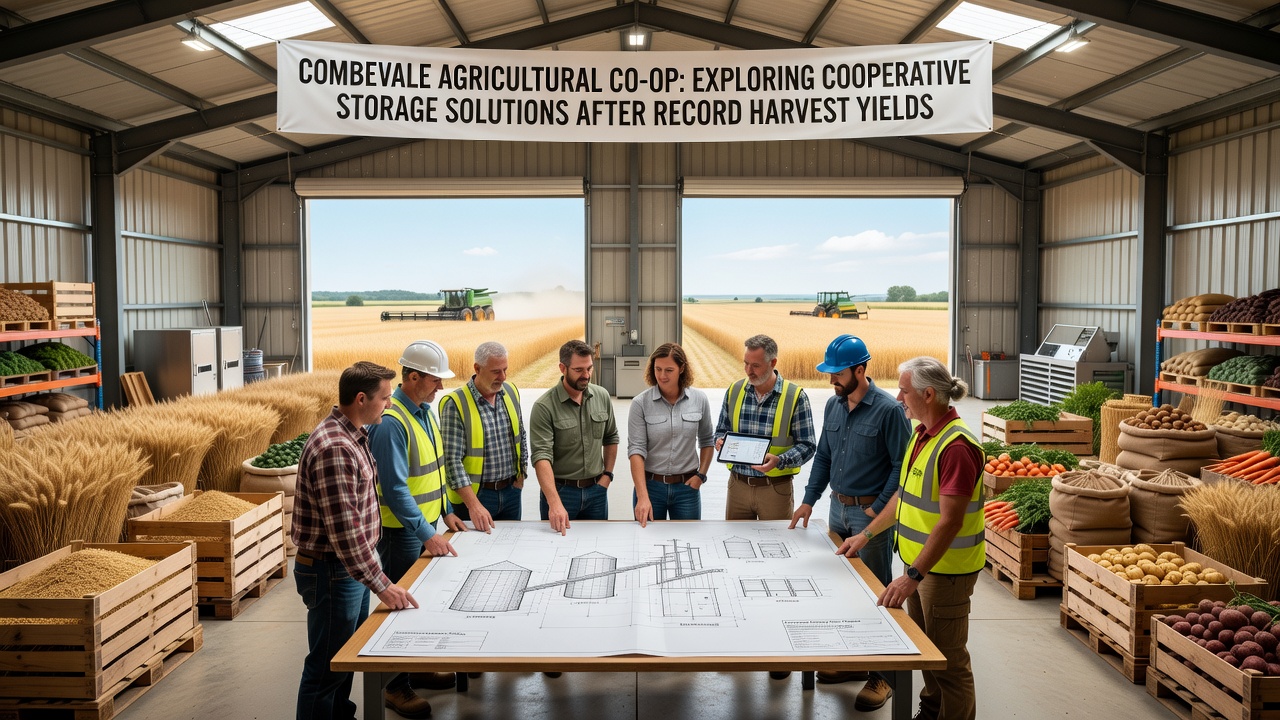
Meetings held throughout October 2026 brought together representatives from multiple farms to review shared facility models, with discussions centering on cost-sharing frameworks and site selection criteria that could accommodate future surplus volumes. Observers note these sessions focused on technical specifications such as temperature-controlled environments and pest management systems rather than individual farm expansions.
Harvest Data and Storage Shortfalls
Figures released by the local agricultural cooperative indicate wheat and barley harvests exceeded projections by significant margins, while root vegetable collections required additional temporary measures including field-side covers. Those who've tracked yield patterns over multiple seasons point out that storage infrastructure has remained largely unchanged since the early 2010s, leaving limited headroom for spikes like the one seen this year.
Researchers from the University of Exeter's Centre for Rural Policy Research have documented similar situations in other UK regions where cooperative models reduced per-unit storage costs by up to 25 percent when farms pooled resources. The approach allows smaller operations to access equipment and monitoring systems that would otherwise remain out of reach for single-site budgets.
Models Under Consideration
Participants have reviewed several operational structures drawn from established cooperatives in comparable settings. One proposal involves converting an underused barn complex near the eastern edge of the vale into a centralised hub managed by a newly formed association, while another examines modular container systems that can be relocated between participating farms as harvest cycles shift.
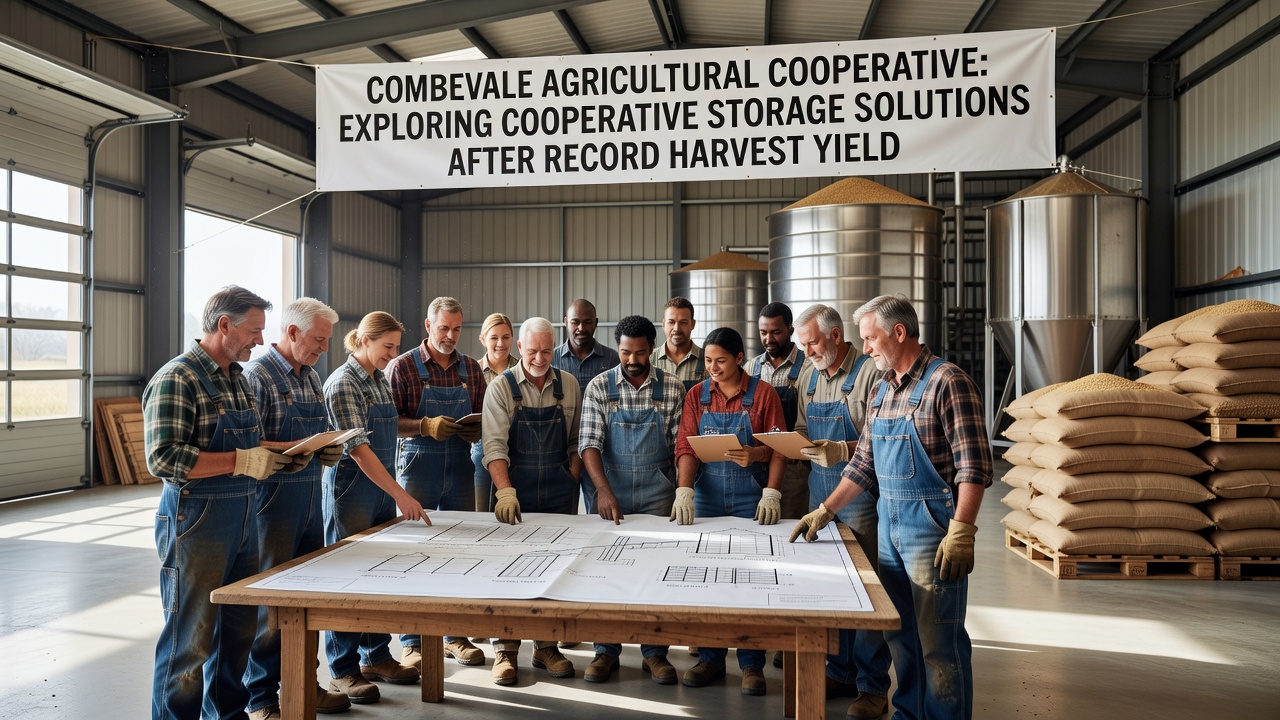
Case studies from Agriculture and Agri-Food Canada illustrate how shared facilities in prairie provinces maintained grain quality through coordinated drying and aeration schedules, outcomes that local planners have referenced during their own assessments. Australian Bureau of Agricultural and Resource Economics reports similarly highlight reduced spoilage rates when multiple growers coordinate inventory tracking through a single digital platform.
Discussions have also addressed insurance requirements and liability allocation, with legal advisors outlining frameworks that distribute risk proportionally based on stored volume rather than ownership stake. These elements form part of the documentation currently under review ahead of any formal agreement.
Implementation Timeline and Next Steps
Working groups established in October 2026 aim to produce a feasibility report by early 2027, including site surveys and projected capital requirements. Funding pathways under consideration include grants administered through regional development programmes alongside member contributions scaled to farm size.
Those involved emphasise that any adopted system would retain flexibility to adjust capacity annually, reflecting the variable nature of weather-dependent yields. Technical consultants have been invited to present on sensor-based monitoring that could integrate with existing farm management software used across the vale.
Conclusion
The shift toward cooperative storage in Combevale reflects broader patterns observed in agricultural communities facing similar output increases. Continued data collection on harvest volumes and storage performance will inform whether the models selected deliver measurable efficiencies in the coming seasons, providing a reference point for other districts evaluating comparable arrangements.