
Jakob Schröder · 29 September 2026
Combevale Health Centre Welcomes New GP as Energy Pressures Close Local Shops and Wind Turbine Proposals Advance
Health Centre Expands Capacity
Combevale Health Centre has added a new general practitioner to its roster, a move that increases appointment availability for residents across the vale according to practice records released in September 2026, while data from the local primary care network shows patient registrations rising steadily over the past year. The additional GP brings expertise in chronic disease management and preventive care, allowing the centre to extend opening hours on weekdays and reduce wait times that previously averaged three weeks for routine consultations. Community health statistics indicate this staffing change aligns with broader trends in rural healthcare delivery where practices adjust resources to match population needs, particularly as older residents require more frequent monitoring for conditions such as hypertension and diabetes.
Commercial Closures Linked to Energy Expenses
Energy costs have forced the closure of several village shops in recent months, with operators citing monthly bills that doubled compared to figures from two years earlier, according to invoices shared with local business associations. Three retail outlets along the high street have shuttered since spring 2026, leaving gaps in daily essentials provision and prompting residents to travel farther for groceries and household items. Figures from the Office for National Statistics reveal commercial electricity prices climbed 45 percent in rural postcodes between 2024 and 2026, a pattern that matches reports from similar communities where small businesses operate on tight margins. Shop owners who remained open report cutting staff hours and reducing stock ranges to manage overheads, while footfall data collected by the parish council shows a 30 percent drop in daily visitors to the remaining premises.
Wind Turbine Discussions Gain Pace
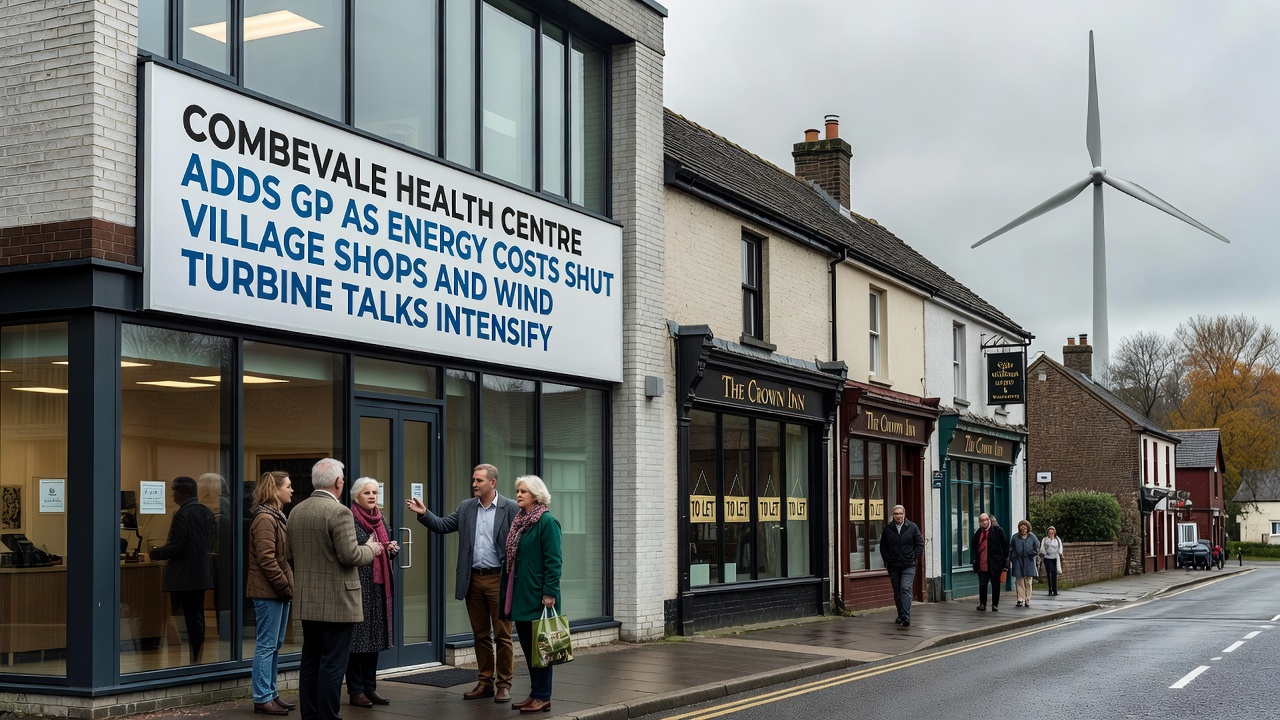
Wind turbine talks have intensified at parish and district levels, with planning documents submitted in September 2026 outlining potential sites on elevated land east of the village. Public consultations scheduled through the autumn draw input from landowners, environmental groups, and energy consultants who present projected output figures equivalent to powering 1,200 households annually. Research from the International Energy Agency highlights how onshore wind installations in comparable UK settings deliver capacity factors above 35 percent when sited on suitable terrain, providing a benchmark for local projections. Meanwhile, a study published by the Australian Renewable Energy Agency examines community benefit models that allocate portions of turbine revenue to village infrastructure funds, an approach referenced during recent Combevale meetings as one option for offsetting visual and noise impacts.
Those attending the sessions note the interplay between rising commercial energy bills and the push for local generation, since turbine electricity could potentially stabilize prices for remaining businesses through direct supply agreements. Technical assessments included in the planning materials detail noise modeling and shadow flicker calculations that adhere to national guidelines, while ecological surveys identify minimal disruption to bird migration routes in the proposed area. Observers record strong attendance at the initial forums, with questions focusing on construction traffic volumes and long-term maintenance responsibilities.
Connections Between Services, Costs, and Renewables
Healthcare access improvements coincide with these economic shifts, as the new GP role includes outreach to isolated patients whose mobility has been affected by shop closures and higher transport costs. Parish records show referrals to community transport schemes increasing 22 percent since the first retail closures, illustrating how energy-driven business exits ripple into other service areas. Wind turbine revenue streams discussed in planning documents could fund additional community transport or even subsidize health centre utilities, creating potential linkages between the three developments that residents explore during open forums.
Local authority energy reports compiled in 2026 document similar patterns in neighboring valleys where turbine installations preceded modest reductions in business electricity tariffs through aggregated purchasing schemes. Data from those sites indicate payback periods of seven to nine years for community-scale projects when grant funding covers initial grid connection expenses. Combevale planners review these precedents while drafting conditions that would tie any approved turbines to measurable local benefits, including contributions toward health and retail support programs.
Conclusion
The addition of a GP at Combevale Health Centre, the closure of shops under energy cost pressures, and advancing wind turbine proposals represent concurrent developments tracked through official channels in September 2026. Each element draws from measurable data sets released by health networks, statistical agencies, and planning departments, while consultations continue to shape how future renewable projects might intersect with village service sustainability. Residents access updated information through parish notices and district council portals as timelines progress.